
Historical progress in food science and industrial chemistry taught us to look for ways to preserve what we value—whether it’s a fresh loaf or a branded lotion. Propyl gallate’s story started out in the early 20th century, as chemists noticed how gallic acid, a natural substance found in oak bark and gallnuts, could fend off unwanted chemical changes in fats. By the mid-1900s, smart folks figured out how to turn this natural backbone, gallic acid, into something more practical for big kitchens and large-scale manufacturers: the esterification of gallic acid with propanol led to propyl gallate. This new antioxidant held up in processing, traveled better, and mixed easily into a wide range of everyday items. That move expanded the toolkits for everyone in food science and cosmetics, keeping products fresher, longer.
Propyl gallate became a staple because it does the job without requiring much. In the pantry, most people never hear its name, even though it works silently in snacks and vegetable oils. In the lab, propyl gallate shows up as a white, powdery crystal, nearly odorless, and it dissolves best in alcohol over water. With a melting point around 148°C, it keeps its form in most food and cosmetic applications. Its chemical formula, C10H12O5, boils down to gallic acid merged with a propyl group—a combo that soaks up free radicals and slows down the browning and rancidity that can ruin flavors and textures.
Consumers rely on clear labeling, and propyl gallate usually appears by its name or with the E number E310. Some countries ask producers to list it when it’s added, especially in margarine, chewing gum, or processed meat. The United States treats it as “generally recognized as safe,” but only up to a certain limit, usually not more than 0.02% of the fat or oil content. People might find propyl gallate paired with other antioxidants like BHA or BHT because using a mix tends to protect foods and cosmetics more effectively than relying on one agent alone. Accurate labeling isn’t just a regulatory requirement; it lets those with allergies or sensitivities make choices for their households.
Making this antioxidant calls for some reliable chemical steps. Chemists react gallic acid with propyl alcohol, using a catalyst—often a strong acid like sulfuric acid—to nudge the reaction into forming the ester bond. Afterward, washing and crystallization purify the finished compound. This process brings efficiency and reproducibility, which big manufacturers need to keep production costs in check. Durable supply chains depend on such straightforward chemistry because any glitches can hit both pricing and availability in countless products.
Propyl gallate doesn’t stop at scavenging free radicals. Chemists like to see how far they can push its structure for better results. Introducing small tweaks to the propyl chain, or swapping in other alcohols for esters like octyl gallate, leads to new antioxidants with different strengths or solubility profiles. Oxidation tests, emulsion trials, and stress conditions bring out the nuances, letting food scientists fine-tune their ingredient choices based on shelf life or sensory qualities. Such modifications matter for industries pushing to extend freshness or create products that last through global shipping cycles.
Propyl gallate might be called E310 in Europe, or just “propyl 3,4,5-trihydroxybenzoate” in technical circles, but the function stays the same. Product labels spanning vegetable oils, cosmetics, personal care, or even adhesives may list one of several synonyms. Anyone trading or importing these goods learns the common aliases; clarity in nomenclature helps with customs, safety filings, and risk assessment worldwide.
Firms that manufacture or package this compound follow common-sense safety steps: keep powders away from flames, use gloves to reduce skin contact, and work in spaces with good ventilation. Regulatory bodies like the FDA or EFSA periodically review the research and set new limits if emerging evidence warrants. For workers in large-scale production, air monitors and regular training keep exposures well below harmful levels. Consumers benefit because quality control teams routinely check batches for purity and handle recalls swiftly if contamination or mislabeling comes up.
For people who reach for a jar of mayonnaise, a bag of snack food, cosmetics, or even prepared spice blends, the odds are fair that propyl gallate is inside. It slows down lipid oxidation—a chemist’s way of saying it keeps foods from smelling stale and turning unpleasantly brown or rancid. Some cosmetic lotions and creams rely on its antioxidant properties to stop oils from breaking down, which can impact both shelf life and how a product feels or smells. Industrial uses stretch into lubricating oils or adhesives, taking advantage of propyl gallate’s knack for preventing breakdown in varied environments.
Food science and medical journals hold dozens of papers examining propyl gallate’s behavior under heat, light, and stress. Pharmacology teams compare its antioxidant activity to vitamin E or other preservatives, mapping out which antioxidants work best for specific foods or personal-care formulas. Research also looks for alternatives that might deliver similar benefits with smaller doses, less risk, or greater stability over time. Even with a long track record of safety, scientists prefer to keep asking hard questions about long-term, low-level exposures, especially since food habits and consumption patterns keep shifting.
Studies in animals and lab-cultured cells suggest propyl gallate handles usual doses in food without big risks. Mice and rats receiving very high doses sometimes show signs of liver stress or other side effects, but regular consumption levels fall far below those thresholds. A handful of people experience allergic reactions—redness or rash mostly—which spurred regulators to cap its use and require it be identified on ingredient panels. Some experts worry that antioxidants, combined with dozens of other food additives in a typical diet, could act in unexpected ways, but there’s little strong evidence linking approved uses to major health problems.
The food and cosmetic industries never stop hunting for better ways to keep products fresh and appealing. Propyl gallate sits in a balancing act: effective, affordable, studied, but not without possible gaps in what we know. Researchers keep gauging how antioxidants interact with new types of packaging or reformulation trends, like the shift toward plant-based, minimally-processed foods. There’s room for bio-based alternatives or methods that cut preservatives entirely, but legacy compounds like propyl gallate remain important for stretches where cold storage or rapid consumption isn’t realistic. As sustainability concerns rise, chemists and food scientists will push for preservatives that break down safely, work in challenging conditions, and reassure both regulators and the public that what we eat and use is as safe as possible.
Walking through the grocery aisles, most people skip past the fine print on packaging. Propyl gallate slips under the radar, squeezed into the ingredient lists of everything from processed meats to baked goods. This little compound steps up against pesky oxygen, helping keep fats and oils from going rancid. No one enjoys the bitter taste of spoiled chips or the smell of stale nuts, so food makers count on propyl gallate to stretch shelf life.
I remember opening a bag of chips that had sat too long on my kitchen shelf. The difference in taste between something protected by antioxidants and something left exposed always hits home. The food industry relies on antioxidants like propyl gallate not only to keep products fresh but also to avoid spoilage complaints—and wasted food.
Propyl gallate shows up mostly in products high in fats and oils—think snack foods, margarine, and even chewing gum. In cosmetic creams and lotions, this additive helps keep products from losing potency or texture before reaching the consumer. It's not making things taste better or sweeter. Its sole job is fighting off the chain reactions that turn oils and fats bad in storage.
This preservative often teams up with others like BHA and BHT, forming a sort of antioxidant squad to protect foods prone to spoilage. It doesn’t magically prevent food from going bad forever, but it’s a reliable tool for food makers facing long shipping times and unpredictable storage temperatures.
Here’s where the debate heats up. While regulatory agencies like the FDA give propyl gallate the thumbs-up at low levels, critics question whether it belongs in food at all. Some research has raised alarms about potential impacts on health, with studies suggesting a possible link to allergic reactions and hormone disruption in animals. So far, most large reviews haven’t found hard proof that propyl gallate harms humans at the amounts usually consumed, but the concerns keep cropping up.
I’ve watched these debates evolve since the days parents checked labels mostly for sugar and salt. Now, antioxidant additives like this catch the eye of shoppers looking for “clean labels.” Food makers know that awareness can hit sales, so some are choosing different ways to preserve foods—like newer natural extracts or packaging technology that slows spoilage without additives.
The story of propyl gallate points to a deeper crossroads in food science. People want convenience and long-lasting food, but growing demand for simpler labels forces the industry to rethink old formulas. A few years ago, I met a baker swapping out synthetic antioxidants for rosemary extract. Customers responded positively, and the bread didn’t lose freshness before reaching their tables.
There’s no magic fix for this balancing act. Adding nothing at all would spike food waste and prices, especially in parts of the world with limited access to cold storage. Shifting to ingredients like vitamin E, ascorbic acid, or natural herbal extracts gives some options, though they don’t always match propyl gallate’s performance or price.
People deserve honest information about what's in their food. Propyl gallate does a real job keeping food safe from rancidity. As customers push for fewer additives, the food world has a chance to get creative—both in how they preserve products and how they build trust with shoppers.
Propyl gallate often shows up on food labels, especially in processed snacks and ready-to-eat items. This additive keeps fats and oils from turning rancid, which means food tastes fresher for longer. Folks who read labels might spot it in baked goods, chewing gum, or even cosmetics. The big question remains: does eating propyl gallate actually put anyone’s health at risk?
Avoiding waste and spoilage sounds good, especially when groceries hit the budget hard. Propyl gallate acts as an antioxidant. Fats and oils in things like salad dressings or cereals spoil quickly without such help. Food companies use it to protect flavor and color, making sure food sits in pantries for more than a few days without going off. I’ve seen my fair share of crumbling, stale crackers—that doesn’t help anyone, least of all hungry kids after school.
The US Food and Drug Administration gave the green light to propyl gallate in amounts up to 0.02% of fat or oil content in foods. The Joint FAO/WHO Expert Committee on Food Additives also went over animal studies and figured out what seems like a safe acceptable daily intake. Regulators in Europe tend to be cautious, setting their own limits, but find it safe in small, managed amounts.
There have been studies over the years. Some suggest extremely high doses—much more than anyone would eat—might bother the liver or cause growth issues in lab animals. Everyday folks probably don’t come close to those levels from food alone. On the other hand, propyl gallate sometimes brings up allergic reactions in people who already struggle with aspirin sensitivity. I met someone who swears off any food label with “gallate” just because of bad headaches—so it pays to watch out if aspirin causes you problems.
Stories pop up now and then about “chemical” additives causing cancers or hormone disruptions. With propyl gallate, there’s back-and-forth debate online. Some animal studies flagged that really high doses might link to tumors or inhibit certain enzymes. On the human front, there’s no clear sign that regular diets lead to such issues. Still, plenty of folks want certainty about what goes into their bodies.
Steering the grocery cart past endless processed snacks and into the produce aisle solves a lot of worries. Limiting how many foods with hard-to-pronounce additives cuts down on propyl gallate consumption. Most nutritionists point to a simple trick: eat more whole foods—fresh fruit, vegetables, plain grains, nuts. By doing so, you naturally skip many additives, including propyl gallate, whether they’re officially safe or not.
Looking ahead, better transparency would help. Food makers and regulators ought to keep testing and updating guidance. Honest, up-to-date science frees up shoppers to make real choices instead of guessing. Propyl gallate might not sit high on most people’s worry list today, but clear, honest labels keep everyone informed. That builds trust and lets parents fill lunchboxes without a side of anxiety.
Many processed foods contain ingredients we often skip over on labels, and propyl gallate falls squarely into that category. It's a synthetic antioxidant that helps keep oils and fats from going rancid. A product sitting on a supermarket shelf often stays fresher longer thanks to additives like this. I've seen it listed in everything from snacks to instant noodles and even some cosmetics or pharmaceuticals.
Concerns about food additives like propyl gallate tend to pop up whenever folks start asking, "What's in my food?" The truth is, most people want transparency and trust in what they’re eating. Propyl gallate isn’t a new entry – it’s been used for decades – but only recently have voices grown louder about its possible health effects.
Studies suggest most people don’t run into problems with small amounts. Regulatory agencies in the US and Europe currently allow it in specific concentrations. But scientists have studied possible links between this additive and allergies or digestive troubles. Some animal tests reported mild irritation, and a few sensitive folks have claimed headaches or stomach upset. There’s also been talk about potential hormone disruption, but current data don’t confirm any clear link at the low levels found in food.
Talking with friends and family, hardly anyone can pinpoint a time they reacted to propyl gallate alone — it gets hidden behind bigger food choices. When I dug deeper, I found the bigger issue: we eat a lot of packaged snacks, and many contain not just this one additive but a cocktail of preservatives. Isolating the effects of one can get tricky.
Current research says that most healthy adults digest small doses just fine. Doctors recommend people with asthma or those sensitive to aspirin watch out, since there could be some overlap with allergic responses. The European Food Safety Authority ran updated reviews on it recently, suggesting the current limits remain safe, with a daily intake kept quite low. The FDA reached similar conclusions.
On the flipside, studies from some research groups urge further investigation, especially since food safety should keep pace with changing diets and new health data.
Food additives spark a bigger conversation about health, not just propyl gallate. Many people are starting to check labels more carefully. More people now push for clear labeling, not because they distrust every additive, but because they want the right to make informed choices for themselves and their families.
I talk about this often with parents who’d rather pack lunches than buy pre-packaged ones. They crave straightforward info: is this ingredient safe over a lifetime? No one has a crystal ball for how different additives will interact in the long run, especially in children or those with compromised immune systems. Even if large studies clear propyl gallate for moderate use, a little more openness and updated research can only help.
Pushing for practical solutions makes sense. Everyone deserves a chance to know what's in their food. Regulators could review and update allowable additive levels as new science comes out. Companies should provide clear ingredient information, and schools can teach kids to read labels and understand what’s inside that snack bar.
If someone experiences symptoms they suspect are linked to food additives, consulting a doctor is important. Trying out whole foods and reducing reliance on processed choices often makes people feel better, additive or not. Propyl gallate remains legal in many places, but keeping the conversation going is key for public trust in our food supply.
I remember the first time I tried to make sense of the ingredients in a snack bar. Propyl gallate popped up on the list, and honestly, I had to look it up. The name sounds clinical, almost like something you’d hear murmured in a laboratory, and it’s easy to assume anything with that sort of name comes from a beaker rather than a tree. That’s the thing about food additives: The line between natural and synthetic gets confusing fast.
The honest answer is propyl gallate does not come straight from nature. Nobody’s picking it from a bush or grinding it out of a seed in its final form. The story starts with gallic acid, a naturally occurring substance. Gallic acid exists in a bunch of plants—think tea leaves, oak bark, and even some berries. But to create propyl gallate, scientists combine gallic acid with propanol through a chemical reaction. That process doesn’t happen on its own in the wild. The finished product is a synthetic compound, made using ingredients that started out in nature but transformed with a fair bit of human ingenuity.
Synthetic doesn’t always have to set off alarm bells. Propyl gallate has a job to do: It slows the process of fats going rancid. Foods with oils—snack bars, frying oils, cereals—keep their taste and don’t go off as quickly. Without antioxidants like propyl gallate, grocery stores would deal with more spoiled chips, and households would throw out more food. The stuff actually helps cut back on waste.
Digging through studies, a consistent theme comes up: Food authorities like the FDA set limits on how much can end up in your cheese or baked goods. If you eat foods from the grocery store, there’s a solid chance you’ve had propyl gallate at one point or another. Decades of research have looked at its effects. Results suggest propyl gallate stays relatively stable in the body and leaves through natural digestive processes, but that doesn’t mean it’s always risk-free. Some animal studies link high doses with potential health issues, which is exactly why there are strict limits in place.
As someone who tries to feed my family real food, I can’t ignore where ingredients come from. Synthetic compounds—by nature of how they’re made—raise questions for many shoppers. We trust that manufacturers test and regulators check, but curiosity helps us make informed decisions. Lab-made doesn’t always mean unsafe, just as natural doesn’t always mean harmless.
Food makers could do a better job at explaining these ingredients. I want to know if my granola bar uses a lab-made preservative because it preserves flavor or because it’s just cheaper. Better labeling, plus honest communication about why propyl gallate appears in a product, would go a long way for consumer trust. More companies have started to swap lab-made antioxidants for extracts from green tea or rosemary. That’s not always possible for every food, and natural options can come with their own baggage—higher cost, shorter shelf life, or different taste.
Whenever I see words I can’t pronounce in my pantry, I look them up and keep a running list of “need-to-know” ingredients. Propyl gallate reminds me that plenty of science is at work in the food industry. Still, reading labels and asking questions about how things are made helps me feel more in charge at the grocery store. And that matters just as much as whatever buzzword gets printed on the front of the box.
A trip to the grocery store can teach you a lot about modern food. Walking down the shelves, those with a habit of reading labels might spot “propyl gallate” mixed into the fine print on packaged snacks and baked goods. Me, I started noticing it in tart candies and even in some cooking oils. It’s in the mix to keep food fresh longer and stop fats from going rancid, which becomes important when products spend weeks or months waiting to be eaten.
Propyl gallate belongs to a group of antioxidants. It comes from gallic acid, which pops up in plants. Food scientists use it because it slows down the process that makes food spoil. That sort of science helps store shelves stay stocked, but people sometimes want to know whether what’s in their food can cause trouble—especially folks with allergies or sensitivities.
Over the years, health agencies like the FDA, European Food Safety Authority, and World Health Organization have looked at propyl gallate. They set safe levels for food products and haven’t found evidence that triggers alarm bells for most people. Still, scattered research and some rare case reports note that, in a small slice of the population, exposure can cause reactions. These might look like skin reddening, hives, or flare-ups for those already prone to asthma or eczema.
The numbers here are small. Major reviews cover big groups, and food safety panels haven’t spotted a trend of routine reactions to propyl gallate. In the most reliable studies, only isolated individuals reported rashes or sensitivity, sometimes in settings where doctors tested the chemical directly on the skin. These reactions seem more possible in those who already wrestle with a whole bag of allergies rather than folks who usually eat anything they like.
Clear labels help people avoid triggers. Food allergies and sensitivities push folks to read every word on a snack wrapper. In my experience coaching a friend with peanut allergies, not every risk is obvious—so ingredient panels matter. Propyl gallate sits low on the list of food allergens, but for families with a track record of sensitivity, knowing what’s in food provides peace of mind.
Governments require food makers to list additives like propyl gallate, even if the chance of allergy seems slight. That comes in handy for doctors, too. Diagnosing a patient with strange hives or persistent rashes becomes easier if all ingredients are visible. For some people, a process of elimination points to ingredients that don’t usually get much attention.
People can choose foods with short ingredient lists if they want to avoid additives altogether. Some natural food markets and bakeries leave out preservatives like propyl gallate for those who feel uneasy about chemicals most shoppers never think about. Keeping a food diary—and getting medical advice if rashes, breathing trouble, or swelling crop up—makes sense for anyone worried about odd reactions.
A growing number of folks prefer to focus on whole foods: fruits, vegetables, fresh meats, homemade breads, and snacks. The fewer additives, the fewer questions about unexpected symptoms. For those who don’t notice any problems, reading labels now and then keeps them aware of what shapes the food supply. Propyl gallate doesn’t spark a major allergy panic like nuts, dairy, or seafood, but informed choices always start with reading and learning.
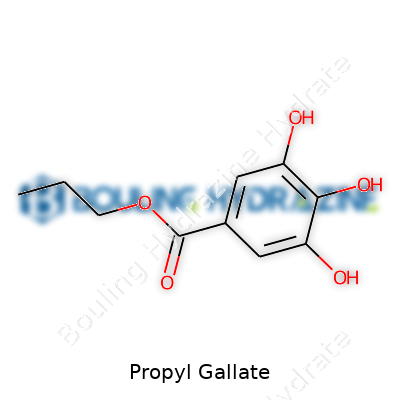
| Names | |
| Preferred IUPAC name | propyl 3,4,5-trihydroxybenzoate |
| Other names |
Propyl 3,4,5-trihydroxybenzoate
n-Propyl gallate Gallic acid propyl ester E310 Propyl 3,4,5-trihydroxybenzoate |
| Pronunciation | /ˈproʊpɪl ˈɡæleɪt/ |
| Identifiers | |
| CAS Number | 121-79-9 |
| 3D model (JSmol) | O=C(OCCC)c1cc(O)c(O)c(O)c1 |
| Beilstein Reference | 1877962 |
| ChEBI | CHEBI:8461 |
| ChEMBL | CHEMBL28617 |
| ChemSpider | 4948 |
| DrugBank | DB01652 |
| ECHA InfoCard | 100.204.498 |
| EC Number | 204-498-2 |
| KEGG | C07428 |
| MeSH | Propyl Gallate |
| PubChem CID | 4947 |
| RTECS number | LW8400000 |
| UNII | 8D4SNI7V92 |
| Properties | |
| Chemical formula | C10H12O5 |
| Molar mass | 212.20 g/mol |
| Appearance | White to cream crystalline powder |
| Odor | Odorless |
| Density | 1.21 |
| Solubility in water | 0.35 g/100 mL |
| log P | '1.8' |
| Vapor pressure | 1.64E-8 mmHg at 25 °C |
| Acidity (pKa) | 8.5 |
| Basicity (pKb) | 5.9 |
| Magnetic susceptibility (χ) | -1.12e-4 cm^3/mol |
| Refractive index (nD) | 1.558 |
| Thermochemistry | |
| Std molar entropy (S⦵298) | 356.0 J/mol·K |
| Std enthalpy of formation (ΔfH⦵298) | -1025.8 kJ/mol |
| Std enthalpy of combustion (ΔcH⦵298) | -4648.8 kJ/mol |
| Pharmacology | |
| ATC code | D11AX22 |
| Hazards | |
| Main hazards | H302 Harmful if swallowed; H315 Causes skin irritation; H319 Causes serious eye irritation; H317 May cause an allergic skin reaction. |
| GHS labelling | GHS07; Warning; H317 - May cause an allergic skin reaction; P261, P272, P280, P302+P352, P333+P313, P362+P364, P501 |
| Pictograms | GHS07 |
| Signal word | Warning |
| Hazard statements | H302,H315,H317,H319 |
| Precautionary statements | P261, P280, P302+P352, P304+P340, P305+P351+P338, P312, P332+P313, P337+P313, P362+P364 |
| NFPA 704 (fire diamond) | 1 1 0 |
| Flash point | 190°C |
| Autoignition temperature | 430 |
| Lethal dose or concentration | LD50 (oral, rat): 3800 mg/kg |
| LD50 (median dose) | 3800 mg/kg |
| NIOSH | No NIOSH REL established. |
| PEL (Permissible) | Not established. |
| REL (Recommended) | 20 mg/m3 TWA |
| IDLH (Immediate danger) | N.D. |
| Related compounds | |
| Related compounds |
Gallic acid
Ethyl gallate Methyl gallate Butyl gallate Octyl gallate Dodecyl gallate Pyrogallol Tannic acid Propyl 3,4,5-trihydroxybenzoate |

Providing high-quality chemical products and logistics solutions for global trade partners.



