
Hydrazine has carried a heavy reputation since its discovery more than a century ago. The first preparation goes all the way back to 1887, when Theodor Curtius managed to isolate hydrazine by reacting hydrazobenzene with sodium hypochlorite. Researchers in those days experimented with every combination they could cook up, not just for scientific curiosity but because the industry then demanded powerful chemicals. Hydrazine hydrate, the key water-based version, came into regular use once chemists tweaked old approaches for higher yields and better control. World War II propelled research forward, as those years generated an urgent need for propellants and blowing agents. Industrial production kicked off in earnest, often using the Raschig process. The journey of hydrazine hydrate intersects with big moments in chemical safety, environmental regulations, and even space travel. Every step forward pushed the limits of what industry and science could achieve—along with tough lessons about risk and responsibility.
The simplest way to look at hydrazine hydrate is as a clear, liquid mixture of hydrazine in water. It isn't some bland fluid—it smells a bit like ammonia and has a sharp, irritating edge. The molecular formula, N2H4·H2O, tells you it’s a water-holding chemical workhorse. Its density lands above that of water, its melting point stays low, and boiling occurs at a temperature just shy of 120 degrees Celsius, depending on concentration. In my own work, even the tiniest whiff signals safety gear must go on. Hydrazine hydrate doesn’t play nice with air—exposure means real trouble for skin and lungs. Its basicity is strong enough to corrode metals and break down complex molecules, yet it’s persistent enough to survive inside chemical streams more stubborn than most. The strong reducing properties make it essential for deoxidation, and these same traits earn it a spot in everything from rocket science to the water treatment industry.
Quality matters in any chemical, and with hydrazine hydrate, it’s non-negotiable. Purity levels often top 80 percent by weight, sometimes higher where ultra-clean feeds matter. Industry tests focus on color, pH, density, and levels of iron, chlorides, and other tramp elements. Getting close to analytical grade involves effort—every contaminant brings a new safety problem or spoils reaction yields. Packages come labeled with warning icons and hazard codes, and every drum or container demands secondary measures just to avoid accidental leaks or vapor buildup. Even for small-batch labs, technical sheets spell out strict details. I remember my own first encounter with a hydrazine shipment—triple-checked labels, gloves that reached above my elbows, and that sense of respect you only feel around chemicals with a long record of both progress and peril.
The Raschig process set the baseline for modern hydrazine hydrate preparation. At its core, this process reacts ammonia with sodium hypochlorite, with gelatin or glue thrown in to help manage reaction intermediates. Side reactions always keep process engineers up at night—every bit of feed and temperature drift changes the outcome. Nowadays, more efficient routes push for better yields, from hydrazine sulfate pathways to urea-based reactions. These tweaks matter on the shop floor when plant managers weigh raw material costs and downstream purification headaches. Owning a chunk of chemistry history means every new approach learns from the lessons paid for in old spills and cleanup bills. As production scales rise, waste management problems demand complex solutions, making the preparation step a focus not just for chemists but also for regulators, engineers, and local communities.
Hydrazine hydrate can reduce metal ions, strip oxygen from boiler feedwater, and form all sorts of derivatives. Add a pinch of acid and it snaps together with carbonyls, giving rise to hydrazones or azines. Mix it with chlorinating agents and explosive risks build—industrial safety teams keep a close watch. In research labs, hydrazine hydrate opens the door to pharmaceuticals, herbicides, and dyes, bridging disciplines from organic synthesis to materials science. Side reactions and modifications let researchers craft analogs with unique uses, and every tweak in the structure changes how it fits into new applications. From forming blowing agents in the plastics industry to treating metals, the chemical reactions never really end—there’s always another possibility around the corner for anyone willing to chart the waters carefully.
Walk into a supply warehouse or scan a product registry, and hydrazine hydrate turns up under quite a few names—hydrated hydrazine, hydrazine monohydrate, and even “HHA” in shorthand lists. Chemists call it an “aqueous solution of hydrazine” when handling high-purity work. Each name reflects a different slice of the industry—what you call it depends on whether you’re tinkering in a plant, monitoring large water systems, or scribbling notes in a research notebook. This confusion can breed safety mistakes, so training sessions press for clarity in labels and logbooks. It’s probably cost a few gray hairs across the chemical workforce.
Hydrazine hydrate comes with a long safety rulebook for good reason. The label “toxic” sticks, but that undersells it. Handling the chemical requires full PPE—good gloves, splash-proof goggles, and solid ventilation. In bigger facilities, automated systems track vapor levels. Emergency showers and eyewash stations cluster near every hot zone. In my own experience, the difference between routine work and a near-miss relies on habits. Hydrazine hydrate attacks mucous membranes, burns skin, and turns simple lapses into trips to the clinic. Strict spill control runs side-by-side with procedures for fire or accidental mixing with oxidizers. Facility layouts often reflect worst-case planning, with clear zones, storage segregation, and real-time monitors. Regulators don’t just watch—they enforce, because environmental contamination carries long-lasting impact.
Industry runs on chemicals like hydrazine hydrate. Power stations depend on its ability to scavenge oxygen, keeping boilers healthy and metal pipes free of rust. Polymer plants use it to produce foaming agents for lightweight plastics, especially in packaging and automotive parts. Rocket scientists know hydrazine hydrate as an energetic component in space propulsion, helping satellites reach careful orbits. Research groups use it in pharmaceutical designs, piecing together heterocycles and other scaffolds for drugs and pesticides. The chemical’s versatility trickles through niche sectors, from photography processing to mining, wherever controlled reduction or nitrogen sources fill a need. Hydrazine hydrate shows up on the world stage carrying an outsized share of both innovation and risk.
Research doesn’t slow down for chemicals with baggage. Hydrazine hydrate continues to draw attention in environmental studies, green chemistry, and drug synthesis. New uses crop up in nanotechnology, where controlled reduction enables the assembly of metal nanoparticles with high precision. The ongoing drive for sustainability brings two fronts of inquiry—methods that cut waste in hydrazine manufacture and safer substitutes in its main application zones. Scientists are working to replace hydrazine hydrate in some rocket fuels with options that pack less hazard for ground crews and the planet. Work also presses ahead in water treatment, both to boost oxidation control and to neutralize hydrazine’s downstream environmental threat. Better catalytic processes have begun to cut emissions at the source, tightening control over every mole that leaves the plant. The future for hydrazine hydrate lies on a knife’s edge: its promise in material and pharmaceutical science balanced against a skeptical public and the watchful eye of regulators.
Toxicology research has cracked open the true cost of hydrazine hydrate. Long-term exposure damages organs, triggers cancer risks, and shows up in nerve and liver studies going back decades. Inhaled or absorbed through skin, hydrazine causes headaches, nausea, and persistent respiratory trouble. Industrial safety standards arose from hard lessons—accidents and exposed workforces led to studies that shaped current regulations. Toxicity doesn't simply stop at people; aquatic life suffers with hydrazine in wastewater, even at low parts per million. The push for improved waste treatment and emission cuts rests on this real-world impact. I have watched safety culture change as new research shifted consensus from casual handling to strict scrutiny—and every new finding only strengthens the case for caution.
Looking forward, the story of hydrazine hydrate stands at a fork. Industries crave its unmatched chemical muscle, but public opinion and regulation hang heavier than ever. Work to design safer synthesis approaches—atom-efficient, lower-emission, less wasteful—has drawn sharp minds from academia and process engineering alike. Replacement technologies are showing early results but still lag on cost and performance in mission-critical uses. Researchers keep pressing for new catalysts and reaction partners, seeking value from hydrazine hydrate without letting risk run unchecked. The future could see it wane in some fields and surge in others, each shift shaped by fresh science and evolving social license. My own time in the lab has taught me to respect both the creative energy and the hard limits set by chemicals like hydrazine hydrate—progress only moves forward when judgment goes hand-in-hand with innovation, and nowhere does this feel truer than here.
Hydrazine hydrate catches the attention of people working in labs and chemical plants. Most folks never encounter it unless they work around big machines or deal with specialty chemicals. But this clear, oily liquid touches far more lives than you might expect. It doesn’t sound glamorous, but it has a big hand in running trains, making things cleaner, and even sending satellites into space.
If you walk through any power plant or factory using big boilers, someone on the team checks water quality every shift. Hydrazine hydrate comes into play because it stops corrosion in boiler feedwater systems. Oxygen inside the water causes rusting and, in time, eats away at pipes and metal walls. Adding hydrazine hydrate zaps that oxygen out, slowing the rust process. This keeps repair bills down and helps boilers last longer. I’ve talked to maintenance folks who watch pipes as if they’re keeping a family car running. They understand that cutting corners here leads to leaks or shutdowns, and regular hydrazine dosing often makes the difference between smooth operation and an expensive emergency.
On another front, hydrazine hydrate shapes how we think about space travel and defense. It acts as a stepping stone for making hydrazine rocket fuel. Major space agencies and satellite-launch companies depend on this application. You wouldn’t fill your car with it—the safety risks and handling requirements keep it far from everyday life. But each time a satellite corrects its orbit, there’s a good bet hydrazine or one of its cousins played a role in getting it there. For those working in the aerospace field, reliability and performance mean everything. They need fuel that burns clean and hits the right thrust every single time.
Dyes, pharmaceuticals, and plastics all draw on hydrazine hydrate. In textile factories, workers rely on it to create bright, lasting dyes. The pharmaceutical field, where millions of people trust their health to the quality of ingredients, also uses it to prepare certain drugs. For plastics, it helps manage the chemical reactions that give products the right texture and strength.
Spending time around hydrazine hydrate makes you respect its power and its dangers. Health authorities label it as hazardous for a reason. Folks working with it wear heavy-duty gloves and face masks—and spills mean calling experts, not just mopping up. Safety rules and tight regulation matter. Factories must balance getting results with keeping workers and their communities safe. Some laboratories now chase safer substitutes, but many industries still lean on hydrazine because it gets the job done where other chemicals fail. Change happens slowly, especially in fields that can’t afford mistakes.
Watching trends in Europe and parts of Asia, some companies push for processes that phase out hydrazine completely. They experiment with oxygen scavengers that cause fewer health risks or develop rockets powered by “greener” fuels. Others invest in better containment and recycling, squeezing every bit of efficiency from what they already have. The drive for cleaner, safer industry doesn’t edge hydrazine hydrate out overnight. It’s woven into many modern manufacturing threads. At the same time, smarter handling, tech advances, and substitution might shrink that footprint over time. For people near chemical operations or in these trades, the reflection on safety and responsibility never really pauses.
Hydrazine hydrate has never belonged in the “safe to handle” club. In the chemical industry and even in some research labs, people treat this stuff like a snake—unpredictable and always ready to strike. From my own stints in university labs, I remember the full-page warnings: goggles, gloves, lab coat, the works. Not because someone wanted to make tasks tougher, but because hydrazine hydrate bites hard if you slip up.
Breathing in vapors can tear up your lungs—workers have developed nosebleeds, chest pain, and cough after exposure. It’s not a rare for someone to have skin turn red or blister after a spill either. The danger sticks around the eyes too; splashes can mean redness, swelling and, with enough dose, even lasting damage. Prolonged exposure sometimes leads to long-lasting respiratory problems. According to the U.S. National Institute for Occupational Safety and Health, it’s also a possible carcinogen. That’s not a reputation you want in anything that’s not locked away.
Spilling hydrazine hydrate does more than threaten people nearby. It finds its way into soil and water, challenging water treatment plants and posing risks to aquatic life. Even fish struggle to survive near manufacturing facilities where regulations aren’t strict. A chemical with this much punch causes harm far outside the walls of the plants that make it.
Everyone who works with hydrazine hydrate has a story. I remember hearing about an accident in a neighboring research building—a technician bumped a bottle off a bench, and the cleanup triggered alarms and a whole building got cleared out in under five minutes. That’s not a drill; it's real risk management. Companies pour effort into tight handling guidelines because, once it’s out in the open, you can’t take chances with ventilation. Inhaling fumes can send someone to the hospital or worse.
Why stick with such a hazardous chemical? For some industries, the answer is rocket fuel, pharmaceuticals, and certain water treatments where no easy replacement exists. The cost of stopping use altogether gets weighed against the chance to save lives or streamline manufacturing. Researchers and engineers chase candidates that offer less risk, but in some fields, hydrazine hydrate still claims a key spot.
Some efforts aim at swapping out hydrazine hydrate for less dangerous options. Improved process design, automation, and rigorous worker safety programs help reduce accidents, but don’t erase the threat completely. Training and ventilation are must-haves—nobody should handle this level of risk with hope alone. Engineering controls, airtight process lines, and personal protective equipment remain frontline defenses. Where possible, industries look at replacing open handling with closed systems that limit exposure every step of the way.
People deserve to know what travels through the pipes and vats that make modern life possible. Hydrazine hydrate doesn’t get the same headlines as consumer toxins, but the risks are just as real—it endangers workers, the environment, and sometimes, whole communities. Shedding light on chemicals like this isn’t about fear or blame. It’s about respecting the reality behind the research, and turning caution from a rule into a habit.
Hydrazine hydrate doesn’t play games. Anyone thinking about storing or handling it has to treat it with real caution. My years working near chemical tanks have taught me that some materials, like salt or vinegar, ask little from their caretakers. Hydrazine hydrate belongs nowhere near that group. It isn’t widespread in everyday households, but it pops up all over industrial plants, labs, and even rocket fuel work. The stuff reacts fast and can turn a minor mistake into a full-scale emergency.
This liquid packs a double punch: it’s toxic, and the fumes irritate the eyes, skin, and lungs. In high doses, it can crash entire organ systems. Shortcuts in handling can lead to big regrets. Walk into a poorly ventilated storage room with a leaky drum of hydrazine hydrate, and you may not walk out feeling the same—or at all. Regulators like OSHA and the EPA stay tough on this chemical for a reason.
In my experience, storing hydrazine hydrate invites a checklist mentality, but each box on that list means something. It cannot sit near heat sources, sparks, or direct sunlight. Even a regular lightbulb in the wrong spot can trigger trouble after long enough. Only solid, sealed containers make the cut—usually made with specific plastics or metals that hydrazine can’t break down. Forget about glass jars or thin-walled tanks. The right option keeps the liquid and its fumes trapped tight.
People sometimes ask why it belongs far away from oxidizers or acids. Mixing hydrazine hydrate with other reactive materials often ends explosively. Modern warehouses place it on segregated shelves or even in separate rooms, usually with labels screaming its dangers in every language needed. Dedicated spill kits line these areas because small leaks don’t stay small for long. Where humid, temperature-controlled rooms excel is in limiting worse-case scenarios—a dry, cool, steady space lets hydrazine hydrate sit quietly, instead of breaking down and creating more hazards.
No newcomer should ever wrestle with hydrazine hydrate without direct training. I’ve stood through demonstrations showing just how quickly gloves, goggles, and thick aprons prove their worth. Direct contact burns fast and deep. Nobody gets a pass on protection, even for routine pouring or container changes. Proper ventilation pulls dangerous vapors away from breathing zones, and eye wash stations demand a home within seconds of the storage area—not tucked out of reach. Anyone cracking open a drum should trust their nose less than air monitoring instruments, since low concentrations slip past human senses undetected.
Procedures matter most during transfers. Static buildup turns routine movement into fire risks, so grounding and bonding techniques deserve respect. One industry trick involves using non-sparking tools and slow, steady motions. Rushing never pays off. Even after transferring the chemical, teams inspect seals and connections for new leaks before calling the job finished.
Some chemicals let workers get by with bad habits. Hydrazine hydrate isn’t one of them. Each step—from where it sits on the shelf to the tools in hand and the relief valves above—exists for a reason. Trusting luck or improvising means betting health and reputation on a chemical with zero forgiveness. Over time, good habits stick; supervisors double-check logs, workers support each other, and storage rooms evolve to patch every weak spot found. Solutions always center on respect, vigilance, and teamwork.
Ask anyone who’s ever spent time in a chemistry lab about hydrazine hydrate, and you’ll probably see a raised eyebrow or nervous chuckle. For a lot of us, the formula N2H4·H2O triggers memories of carefully labeled bottles, thick gloves, and a loud warning from instructors about keeping your distance. This chemical doesn’t just live in textbooks. It fuels—and sometimes threatens—real life in everything from rocket launches to pharmaceuticals. That unmistakable mix of hydrazine and water lands with more force than most people realize. Hydrazine hydrate doesn’t lurk around for show. It tends to pack a punch with its usual concentration, often about 80% hydrazine by weight in water, although stronger grades can creep even higher when process specs demand it.
Plenty of folks outside the science world may wonder why someone should care about a formula or concentration level of a chemical they never see on a grocery store shelf. For people who work in manufacturing, engineering, or even environmental safety, it matters every single day. Hydrazine hydrate pours into the workings of power plant boilers to scavenge oxygen. It steps onto the launch pad as a propellant for rockets and satellites. Even off the launchpad, its role in making medicines and agrochemicals means it’s never far from a supply chain we all touch. The catch is, this isn’t the sort of compound that quietly does its job in the background. It’s known as a significant health hazard, a carcinogen that demands tough safety standards and engineering controls at every turn. One exposure incident can have lifelong, even fatal, consequences.
I’ve talked to folks who witnessed first-hand how missing a warning label or a leaky storage drum led to scrambles for the emergency eyewash station. Stories stick with you. In places where personal protective gear or decent ventilation was ignored for even a short time, the results were rarely pretty. That’s a sharp reminder that chemical knowledge is not just for the technically inclined—it’s for anyone whose life can change with just one bad encounter. Knowing the formula isn’t trivia; it’s a layer of defense. Understanding concentration levels can be the difference between a manageable spill and a site-wide evacuation.
Companies and educational labs need to own their part in responsible handling. It always comes back to putting the right training and gear in front of people who have to work with substances like hydrazine hydrate. Regulators play a part too. Oversight that keeps the use and transport of such chemicals tightly controlled isn’t just red tape, it’s a check against real-world disasters. Improvements in detection equipment, closed-system pipelines, and sensible substitution with less hazardous chemicals have helped lower risks, but none of these things work if they’re only words on paper. Ultimately, making people safer around hydrazine hydrate means investing in real culture change—shifting from box-checking to proactive hazard identification, and expecting every user to take the threats seriously.
Few subjects trigger a sharper sense of urgency in a lab or industrial hallway than hearing someone mention a spill involving hydrazine hydrate. Even if you have never seen this chemical up close, its reputation travels fast. Hydrazine hydrate fuels rocket engines, cleans up water in power plants, and helps make some medicines. It also brings risk, and not just in the abstract: headaches, skin burns, cancer if you spend your career around careless handling. Stories about near-misses stick with you.
Hydrazine hydrate does not forgive errors. I learned that on a cold morning in a university lab. Someone knocked over a small vial, and I watched as a white vapor began to creep across the benchtop. The smell hit first—like ammonia, sharp enough to sting my nose. The right approach? Move fast, but think faster. Fumbling for a phone wastes precious seconds. In that moment, one page from a practicum manual mattered: get fresh air, get the exposed person to safety, and bring backup who know what they’re doing.
Staying calm turns out to be the only superpower that matters. Evacuate the area, open windows or use exhaust fans if you know they actually work, and shut off whatever’s leaking if you can do so safely. Only those with the right chemical suits and respirators should try anything beyond this point. Splashing around with paper towels or basic gloves puts more lives in danger, and the vapor can linger and cause invisible harm.
No matter what the movies show, don’t try to “solve” a hydrazine incident single-handed. If you get any on your skin, wash with water for at least 15 minutes. Eyes need the same. It’s old advice, but it beats regret. Medical care isn’t optional here; even brief contact gives the kind of burns and lung damage that make you wish for a different line of work. Doctors need to know exactly what you handled, so it’s smart for every shop or lab to keep safety data sheets within arm’s reach.
Accidents don’t follow the clock. The best places I’ve worked made sure no one stored hydrazine hydrate without a plan: chemical fume hoods actually tested for leaks, fire extinguishers up to date, spill kits visible and not locked in a back room. Regular drills sound like overkill until real danger walks through the door. Managers who cut corners on personal protective equipment or ignore staff concerns put more than their budgets at risk—they set up tragedy.
The legal rules supply a frame, but respect for the danger fills in the picture. OSHA and other regulatory groups lay out the minimum standards, but first-hand experience says minimum isn’t enough. Teams review the risks with new staff, yell about leaks instead of keeping quiet, and challenge habits that drift into carelessness. After a close call, debriefings that dig into mistakes—without blame—build a safer culture.
Saying “safety first” is easy; doing what it takes costs more. If industry looks for less toxic chemicals, or engineers smarter containment systems, everyone wins. It doesn’t excuse sloppy work, but shifting away from high-risk materials can reshape the odds. Where hydrazine hydrate is essential, investing in training and ventilation proves cheaper than medical bills or lawsuits. It doesn't take a chemical degree to see the logic.
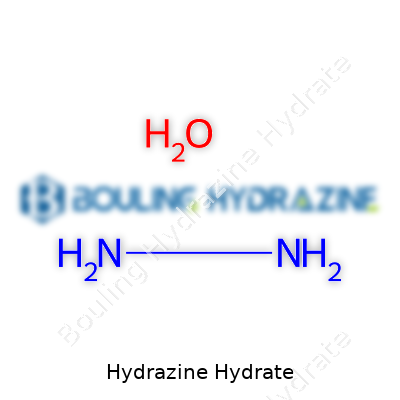
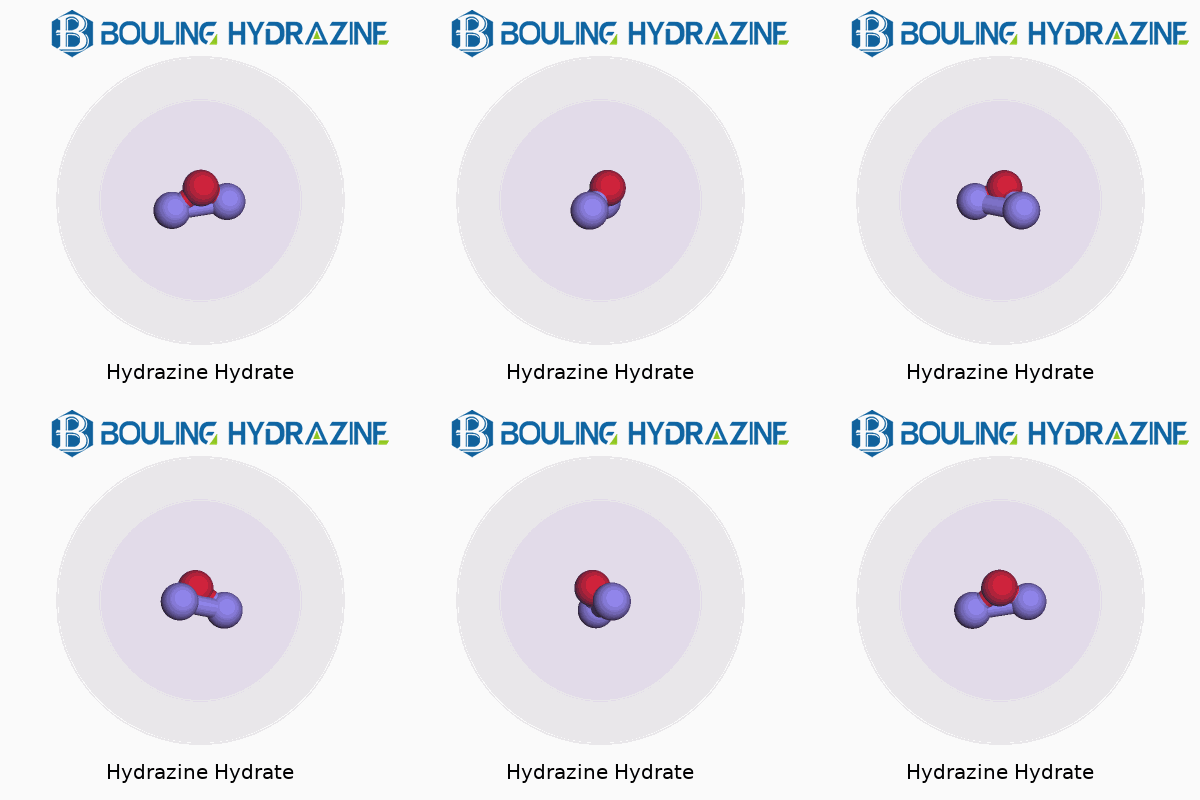
| Names | |
| Preferred IUPAC name | hydrazine monohydrate |
| Other names |
Hydrazine monohydrate
N2H4·H2O Hydrazinium hydroxide Diamide hydrate |
| Pronunciation | /ˈhaɪ.drə.ziːn ˈhaɪ.dreɪt/ |
| Identifiers | |
| CAS Number | 7803-57-8 |
| 3D model (JSmol) | NN.O |
| Beilstein Reference | 878137 |
| ChEBI | CHEBI:24632 |
| ChEMBL | CHEMBL123717 |
| ChemSpider | 23007 |
| DrugBank | Not found in DrugBank |
| EC Number | 215-023-1 |
| Gmelin Reference | 4, 437 |
| KEGG | C05356 |
| MeSH | Hydrazine |
| PubChem CID | 24654 |
| RTECS number | MV8050000 |
| UNII | 2Y8Q6T6X8N |
| UN number | UN2030 |
| Properties | |
| Chemical formula | N2H4·H2O |
| Molar mass | 50.06 g/mol |
| Appearance | Colorless, fuming liquid |
| Odor | Ammonia-like |
| Density | 1.03 g/cm³ |
| Solubility in water | Miscible |
| log P | -2.07 |
| Vapor pressure | 10 mmHg at 20°C |
| Acidity (pKa) | 8.1 |
| Basicity (pKb) | 6.07 |
| Magnetic susceptibility (χ) | -0.71 × 10^-6 |
| Refractive index (nD) | 1.4284 |
| Viscosity | 1.5 cP |
| Dipole moment | 1.85 D |
| Thermochemistry | |
| Std molar entropy (S⦵298) | 166.1 J/mol·K |
| Std enthalpy of formation (ΔfH⦵298) | -242.7 kJ/mol |
| Std enthalpy of combustion (ΔcH⦵298) | -615.2 kJ/mol |
| Hazards | |
| GHS labelling | GHS labelling: Danger; H226, H301, H311, H331, H314, H317, H350, H410; P201, P210, P260, P280, P301+P310+P330, P303+P361+P353, P304+P340+P311, P305+P351+P338, P308+P313, P370+P378, P403+P235, P405, P501 |
| Pictograms | GHS02, GHS05, GHS06, GHS08, GHS09 |
| Signal word | Danger |
| Hazard statements | H226 H301+H311+H331 H314 H317 H341 H350 H410 |
| Precautionary statements | P201, P202, P210, P233, P240, P241, P242, P243, P260, P264, P270, P271, P280, P281, P303+P361+P353, P304+P340, P305+P351+P338, P308+P311, P310, P321, P330, P363, P370+P378, P391, P403+P235, P405, P501 |
| NFPA 704 (fire diamond) | 3 2 2 |
| Flash point | 72°C (162°F) |
| Autoignition temperature | 270°C |
| Explosive limits | 3.4 - 100 vol% |
| Lethal dose or concentration | LD50 (oral, rat): 129 mg/kg; LC50 (inhalation, rat, 4h): 746 ppm |
| LD50 (median dose) | 129 mg/kg (oral, rat) |
| NIOSH | C 0.03 ppm (0.04 mg/m3) [skin] |
| PEL (Permissible) | 1 ppm (1.3 mg/m³) TWA, skin |
| REL (Recommended) | 0.03 ppm (0.04 mg/m3) [2-hour] |
| IDLH (Immediate danger) | 50 ppm |
| Related compounds | |
| Related compounds |
Hydrazine
Hydrazine Sulfate Hydrazine Monohydrochloride Hydrazine Dihydrochloride Hydrazine Nitrate Hydrazine Monohydrate Hydrazine Citrate Hydrazine Tartrate |

Providing high-quality chemical products and logistics solutions for global trade partners.



